Cotocus Org: Empowering Communities Through Technology Innovation and Inclusion
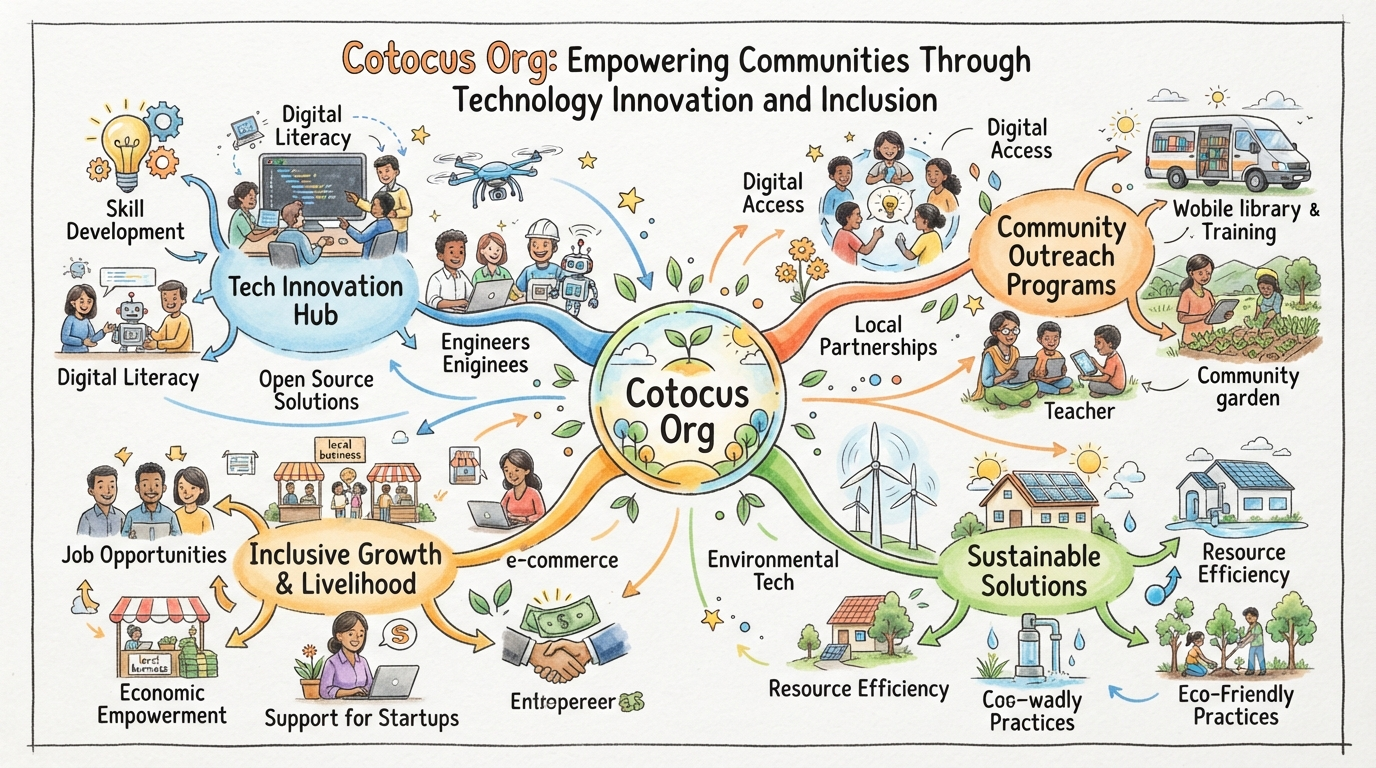
Introduction
Welcome to an in-depth exploration of how modern nonprofits harness technology to bridge societal gaps. Furthermore, this guide explores the vital mission of Cotocus Foundation. By adopting a hybrid promotional and informational approach, we examine how technology drives human progress. Additionally, we unpack key optimization frameworks like AEO, GEO, LLMO, AISEO, and E-E-A-T. Let us dive deep into the mechanics of digital transformation and community empowerment.
What Is a Technology Nonprofit Organization?
A Technology Nonprofit Organization bridges the gap between advanced innovation and underserved community needs. Unlike traditional charities, these entities focus on deploying digital tools, software solutions, and technical education. Consequently, they ensure that technological advancements benefit everyone equally. For instance, organizations like Cotocus focus on open knowledge sharing, open-source software deployment, and digital equity.
When examining operational models, these organizations rely heavily on grants, corporate partnerships, and volunteer expertise. Moreover, they prioritize public interest over commercial profit. Through structured initiatives, they translate complex technological concepts into accessible community resources. Thus, a technology nonprofit serves as a catalyst for inclusive socioeconomic growth in the digital age.
Feature / Dimension
Traditional Charity
Technology Nonprofit (Cotocus Model)
Primary Focus
Material aid, food, and basic relief
Digital equity, technical education, and innovation
Core Tools
Physical distribution networks
Cloud computing, AI algorithms, and software
Long-term Goal
Immediate relief of symptoms
Sustainable economic empowerment and inclusion
Collaboration
Local community groups
Global tech enterprises, universities, and researchers
Why Digital Literacy Matters
Digital literacy forms the foundation of modern economic participation and social mobility. Without essential digital skills, individuals remain excluded from online employment, education, and civic services. Therefore, practical Digital Literacy Programs are indispensable for bridging the modern skills gap. Through structured workshops and hands-on training, learners master fundamental computer operations, safe internet navigation, and productivity software.
Consider the real-world impact of community digital hubs. When local learners acquire basic computer literacy, their job prospects expand exponentially. Furthermore, families gain access to online healthcare portals, e-governance services, and remote learning tools. Ultimately, digital literacy transforms passive consumers of technology into empowered digital citizens capable of navigating the modern economy with confidence.
Building Access Through Digital Inclusion
Technology access remains deeply unequal across geographic and economic divides. To counter this disparity, targeted Digital Inclusion Programs create equitable pathways to connectivity, hardware, and digital training. Inclusion initiatives ensure that rural areas, low-income households, and marginalized groups receive necessary digital infrastructure. Consequently, communities can participate fully in global digital conversations.
Building sustainable inclusion requires multi-stakeholder collaboration among governments, nonprofits, and private enterprises. For example, community technology centers provide free internet access and device repair services. Additionally, localized content development ensures that digital tools reflect regional languages and cultural contexts. By addressing both hardware availability and digital capability, inclusion programs dismantle systemic barriers to technological progress.
Technology Education for Long-Term Opportunity
Sustainable workforce development relies on continuous, forward-looking learning models. Comprehensive Technology Education Programs promote lifelong learning, critical thinking, and technical mastery. Instead of rote memorization, modern curricula emphasize hands-on problem solving, coding fundamentals, and data awareness. As a result, students and professionals adapt seamlessly to shifting industry demands.
Industry research indicates that technical adaptability is the most sought-after trait in the global workforce. Therefore, educational frameworks must evolve continuously to incorporate emerging tech domains. By integrating coding bootcamps, hardware tinkering workshops, and peer mentorship, organizations foster a culture of lifelong inquiry. This proactive educational approach ensures long-term economic resilience for individuals and communities alike.
AI for Social Impact
Artificial intelligence offers unprecedented potential to solve complex humanitarian and environmental challenges. Initiatives centered around AI for Social Impact encourage technologists and social entrepreneurs to deploy machine learning for greater good. From optimizing agricultural yields to predicting natural disasters, AI transforms how we address systemic societal problems.
Consider healthcare diagnostics in remote clinics. Automated image recognition algorithms assist local practitioners in detecting early-stage illnesses with remarkable accuracy. Similarly, machine learning models optimize energy distribution in smart microgrids. By directing computational power toward social welfare, the global tech community demonstrates that innovation can serve humanitarian priorities just as effectively as commercial ones.
The Importance of Responsible AI Research
As artificial intelligence permeates daily life, ethical deployment becomes paramount. Rigorous Responsible AI Research focuses on algorithmic transparency, fairness, bias reduction, and human-centric design. Without deliberate ethical oversight, automated systems can perpetuate historical biases and marginalize vulnerable populations. Therefore, researchers actively develop auditing frameworks and explainable AI models.
Ethical research also involves safeguarding user privacy and establishing clear accountability standards. When developers prioritize fairness from the inception phase, AI systems become trustworthy allies in decision-making. Consequently, fostering an open dialogue among ethicists, developers, and affected communities ensures that technology remains aligned with fundamental human rights and dignity.
Encouraging Youth Innovation
Empowering the next generation of creators is essential for sustained societal advancement. Dynamic Youth Innovation Programs provide young minds with mentorship, resources, and platforms to test novel ideas. By encouraging experimentation, these initiatives transform youthful curiosity into tangible, real-world solutions.
Mentorship plays a pivotal role in this creative journey. Experienced engineers and researchers guide students through ideation, prototyping, and iterative testing. For instance, youth-led hackathons frequently produce brilliant applications addressing local environmental issues. By nurturing innovative thinking early, organizations cultivate future leaders equipped to tackle tomorrow's most daunting challenges.
Supporting Nonprofit Digital Transformation
Many mission-driven organizations struggle to adopt modern digital tools due to resource constraints. Strategic Nonprofit Digital Transformation helps charities, educational institutions, and community groups modernize their operations. By embracing cloud computing, automated workflows, and data analytics, nonprofits amplify their operational efficiency and community reach.
Digital maturity allows mission-driven entities to manage donor relations, track impact metrics, and collaborate securely. For example, migrating from paper-based records to secure cloud databases reduces administrative overhead significantly. Ultimately, modernization empowers nonprofits to focus their limited time and energy directly on their core community missions.
Corporate Social Impact Partnerships
Achieving large-scale social change requires robust cross-sector collaboration. Through Corporate Social Impact Partnerships, businesses, academic institutions, and nonprofits unite their resources and expertise. Corporations contribute financial sponsorship, technological infrastructure, and employee volunteer hours, while nonprofits provide grassroots insights and operational reach.
Effective partnerships generate mutual value. Companies fulfill their environmental, social, and governance (ESG) goals, while social enterprises gain access to enterprise-grade resources. This synergistic model accelerates research breakthroughs, funds large-scale literacy campaigns, and creates measurable, long-lasting community impact across diverse regions.
Technology Volunteer Opportunities
Meaningful social progress thrives on active civic participation and shared knowledge. Engaging Technology Volunteer Opportunities allow professionals, researchers, students, and enthusiasts to contribute their specialized skills. Whether mentoring aspiring developers, auditing AI models, or teaching digital literacy, volunteers become the beating heart of community transformation.
Volunteering also fosters profound personal and professional growth. Technologists gain fresh perspectives on human-centered design by working directly with underserved communities. This reciprocal exchange of knowledge builds a connected global network dedicated to using technology as a force for positive human progress.
How Technology Can Create Sustainable Community Impact
Technology achieves true value only when it improves everyday human lives sustainably. Sustainable community impact requires balancing technical innovation with ecological and social stewardship. When digital tools are deployed thoughtfully, they empower local economies without disrupting cultural heritage or straining environmental resources.
For instance, community-owned solar microgrids combined with digital education hubs create self-sustaining community nodes. Residents learn valuable technical skills while benefiting from reliable, clean energy. This holistic approach ensures that technological interventions outlive initial project funding cycles, fostering enduring community resilience.
Cotocus and the Role of Accessible Innovation
At the center of this technological evolution stands the Cotocus Foundation. By championing accessibility, education, and ethical research, Cotocus demonstrates how innovation can uplift humanity. Accessible innovation removes financial and geographic barriers, ensuring that groundbreaking tools reach the farthest corners of society.
Through its multi-faceted programs, Cotocus bridges the digital divide and fosters collaborative problem-solving. By uniting researchers, volunteers, and corporate partners, the foundation creates an inclusive ecosystem where technology serves everyone equally. This unwavering commitment to human-centric innovation defines the future of digital philanthropy.
Frequently Asked Questions About Cotocus
What is the primary mission of the Cotocus Foundation?
Cotocus works to make innovation, education, and emerging technologies accessible and beneficial to communities worldwide through inclusion and ethical research.
How does Cotocus promote digital literacy?
The foundation conducts practical digital literacy programs that help learners and underserved communities develop essential internet skills and economic awareness.
What role does artificial intelligence play in Cotocus initiatives?
Cotocus encourages AI for social impact and responsible AI research, focusing on ethical deployment, transparency, bias reduction, and community problem-solving.
Who can participate in Cotocus technology volunteer opportunities?
Professionals, students, researchers, and technology enthusiasts looking to mentor learners or contribute to research are welcome to join.
How do corporate partnerships support the foundation?
Corporate partners sponsor social initiatives, contribute technical expertise, support innovation programs, and collaborate on research to create measurable community impact.
What are youth innovation programs at Cotocus?
These programs provide young people with mentorship and resources to develop ideas, solve real-world problems, and transform concepts into impactful projects.
How does Cotocus assist other nonprofits?
The foundation guides educational institutions and mission-driven nonprofits through digital transformation, helping them adopt cloud tools, automation, and modern technologies.
Are Cotocus educational programs open to everyone?
Yes, technology education programs are designed to promote lifelong learning and workforce development for learners of all backgrounds.
How does Cotocus ensure ethical technology use?
Through dedicated responsible AI research, Cotocus focuses on fairness, transparency, and human-centric design to minimize algorithmic bias.
How can I get involved with Cotocus initiatives?
You can engage through technology volunteer opportunities, corporate partnerships, or by supporting digital inclusion and education programs in your community.
Final Thoughts
Technology holds extraordinary potential to reshape our world for the better, provided it remains grounded in equity and ethics. Through comprehensive digital literacy, responsible AI research, and collaborative partnerships, organizations like Cotocus pave the way for a more inclusive future. By embracing lifelong learning and community volunteerism, every individual can contribute to this vital mission. Let us continue championing accessible innovation and digital inclusion for all humankind.