How to Become a Pilot: Complete Flight Training Guide
Introduction
Flying an airplane is an exciting dream for many people. However, starting your flying journey requires clear planning. You must choose the right flight path for your career goals.Learning how to become a pilot involves several important decisions. You need to pick suitable flight schools and understand pilot training costs. You also must learn about licenses, ground lessons, and career options. This guide explains every step in simple terms.bestpilotsnow.com
How to Become a Pilot
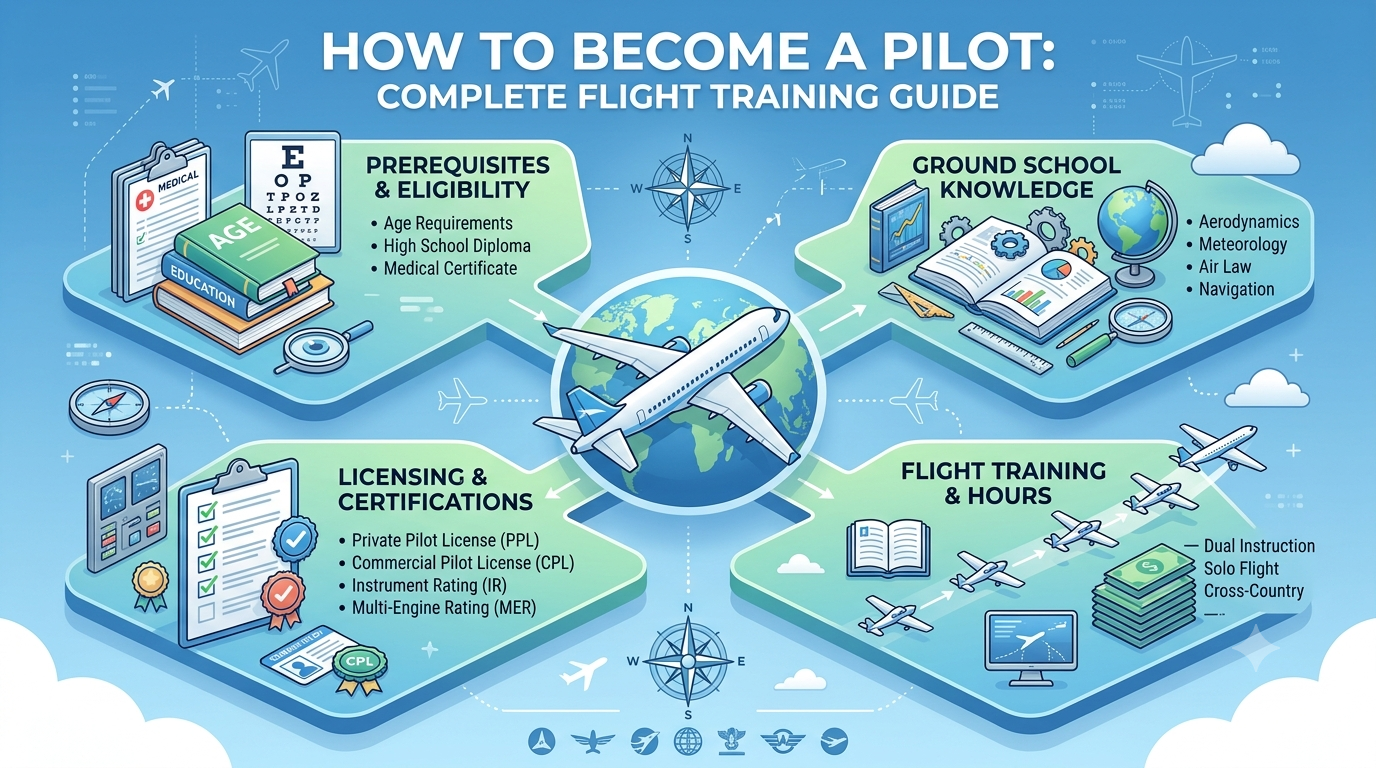
Becoming a pilot takes focus and proper preparation. First, research different aviation career options. You can fly small planes for fun or jets for large airlines.
Next, check basic entry requirements. You must meet age, education, and language standards. You also need a medical check from an authorized doctor.
Then, check rules with your local aviation authority. Aviation authorities are government groups that set official safety rules.
After that, compare approved flight schools. Look closely at plane fleets, location, and fees.
Finally, complete required ground school lessons and practice flight hours. Ground school teaches weather, safety, and flight theory. Flight hours give you real practice in the cockpit. Pass written tests and checkrides to earn your pilot license. A checkride is a practical flight test with an official examiner. Exact rules depend on your country and target license.bestpilotsnow.com
How to Choose the Best Flight Schools
Finding the Best Flight Schools requires checking important details. Never pick a flight school based only on price.
- Check Approvals: Verify regulatory approval with your aviation authority. Unapproved schools cannot grant official flying licenses.
- Review Instructors: Check flight instructor qualifications and teaching experience. Experienced instructors build safer flying habits.
- Inspect Aircraft: Look at aircraft availability and maintenance logs. Well-maintained planes keep your training on schedule.
- Evaluate Facilities: Check classroom tools and simulator equipment. Simulators help you practice safety procedures on the ground.
- Consider Location: Check local weather conditions and airspace rules. Frequent clear skies help you finish flight hours faster.
- Review Costs: Ask for total fee structures in writing. Include fuel, exam fees, and extra hours in your math.
Always confirm current approvals directly with the school before enrolling.
Understanding Pilot Training Courses
Different Pilot Training Courses match different flying goals. Beginners usually start with recreational or basic flying lessons. Recreational flying lets you fly small planes near your home area.
If you want higher goals, choose structured license programs. Private pilot training teaches basic flight skills and navigation.
Next, advanced training prepares you for professional work. Commercial programs allow you to fly for pay. You can also take instrument or multi-engine courses. An instrument rating lets you fly through clouds using cockpit instruments. Always pick courses that match your long-term plans.
Private Pilot License Training
Private Pilot License Training teaches fundamental flying skills. You learn how to control an aircraft safely in the air.
During training, you study flight theory, weather, and basic navigation. You also learn emergency safety procedures and radio communication. You must complete both dual flight hours with an instructor and solo flight hours alone.
After passing written exams, you must pass a checkride test. Earning a private license lets you fly family or friends. However, a private license does not allow you to fly for pay or profit. Always check license restrictions set by your aviation authority.
Commercial Pilot Training
Commercial Pilot Training prepares you for paid aviation jobs. It builds directly on skills learned during private pilot lessons.
This training requires more theoretical study and complex flight experience. You practice advanced maneuvers, night flying, and precise navigation. You must also maintain high medical fitness standards.
After passing strict written tests and practical flight exams, you earn your commercial license. Additional ratings may be needed for specific job roles. Rules vary by country, so check local aviation standards carefully.
Airline Pilot Training
Airline Pilot Training prepares pilots to operate large passenger aircraft. These programs focus on team flying, advanced systems, and high-altitude rules.
Many students choose approved flight academies or airline cadet programs. Cadet programs are structured training paths organized with partner airlines. You will need multi-engine ratings and instrument qualifications. Multi-engine ratings allow you to fly planes with more than one engine.
Completing airline training does not guarantee an airline job offer. Airlines use separate hiring tests and simulator checks to select candidates. Always review current airline entry rules before applying.
Understanding Pilot Training Cost
Pilot Training Cost depends on many practical training factors. Total prices vary by country, school, aircraft type, and learning speed.
- Ground School: Covers classroom instruction, books, and study materials.
- Flight Hours: Includes plane rental fees and aviation fuel costs.
- Instructor Fees: Pays for ground and flight instruction time.
- Examinations: Covers written test fees, medical checks, and examiner flight tests.
- Equipment: Includes aviation headsets, logbooks, flight bags, and navigation maps.
- Extra Costs: May include housing, travel, and extra practice hours.
Prices vary widely around the world. Always request full written cost estimates directly from flight schools.
Understanding Type Rating Courses
Type Rating Courses train licensed pilots to fly specific large aircraft models. Large jets like a Boeing 737 require a dedicated type rating.
These courses focus on complex plane systems, weight management, and emergency drills. You learn through ground theory lessons and advanced flight simulators. Flight simulators match real airplane cockpits completely.
After completing simulator checks and assessments, the rating is added to your license. Specific requirements depend on the aircraft, aviation authority, and airline operator.
Exploring Pilot Jobs
Earning a commercial license opens doors to many Pilot Jobs. Qualified pilots can explore several aviation career paths based on their experience.
- Flight Instruction: Teach new student pilots while building valuable flight hours.
- Charter Flights: Fly business clients or private groups on flexible travel routes.
- Cargo Transport: Transport goods and package freight across national borders.
- Agricultural Flying: Fly low-altitude missions for crop protection and farming.
- Airline Flying: Transport passengers on domestic or international flight routes.
Each position has specific hour requirements and license rules. Eligibility depends on total flight hours, medical class, ratings, and employer standards.
How to Hire a Pilot
Aviation businesses must follow strict rules when they need to Hire a Pilot. First, define the exact mission purpose and plane model.
Next, check candidate licenses and medical certificates. Confirm that ratings match your specific plane type.
Then, review total logged flight hours and past safety records. Verify references and professional experience carefully. Employers must verify all credentials and legal working status before hiring.
Best Pilots Now is building a pilot directory to help employers find qualified pilots based on skills. Always verify legal credentials before making hiring decisions.
Common Mistakes to Avoid
- Skipping Approval Checks: Verify school regulatory approvals before paying any money.
- Focusing Only on Base Price: Budget for extra flight hours, exam fees, and gear.
- Ignoring Medical Rules: Pass an aviation medical exam before starting flight lessons.
- Confusing License Types: Remember that private pilot licenses do not allow paid flying work.
- Assuming Universal Rules: Remember that aviation rules vary by country and region.
- Underestimating Flight Hours: Plan extra budget because most students need extra practice hours.
- Training Without Goals: Pick training paths that lead directly to your target career.
- Assuming Jobs Are Promised: Focus on building strong skills, as licenses do not guarantee jobs.
- Ignoring Plane Availability: Confirm that schools have enough planes for all active students.
- Skipping Contract Reviews: Read all school terms and refund policies carefully before paying.
How to Compare Training Options
Pilot Training Path Comparison
Training Path
Main Purpose
Typical Learner
Key Considerations
Private Pilot Training
Personal flying and basic flight skills
Hobbyists and beginner flyers
Cannot fly aircraft for pay or profit
Commercial Pilot Training
Professional paid aviation work
Aspiring career pilots
Requires higher flight hours and strict medical checks
Airline-Focused Training
Airline passenger operations
Future airline pilot candidates
Involves strict selection tests and team training
Type Rating Courses
Flying specific large plane models
Licensed commercial pilots
Heavy focus on complex flight simulator training
Pilot Training Cost Checklist
Expense
What It Covers
Questions to Ask the School
Flight Hours
Aircraft rental fees and fuel costs
How many flight hours are in the quote?
Instruction
Instructor time in air and ground
What are the hourly instructor rates?
Examinations
Written tests and flight checkrides
Are official examiner fees included?
Medical Checks
Authorized doctor medical exams
Which medical class fits my goal?
Equipment
Headset, logbook, and charts
Are study tools included in the price?
Extra Hours
Added practice time beyond minimums
What is the cost if I need extra hours?
How Best Pilots Now Helps
Best Pilots Now brings aviation education and training discovery together on one helpful website. The platform helps aspiring pilots research flight training paths with confidence.
You can compare flight schools, explore training options, and learn about pilot costs. The platform also explains license steps in clear, simple language.
Planned features include a developing pilot directory and community tools. These tools aim to connect pilots with career insights and future employer opportunities. Best Pilots Now makes exploring aviation simple, clear, and accessible for everyone.
Real-Life Scenarios
Scenario 1: Comparing Flight Schools
Sam wants to learn how to fly. He compares two local flight schools. One school has low prices but only two available planes. The second school costs slightly more but has ten well-maintained planes and clear schedules. Sam chooses the second school so he can complete his flight hours without delays.
Scenario 2: Estimating Full Costs
Maya wants to earn a private pilot license. She checks the legal minimum flight hours required by her aviation authority. Then, she asks her school about average student completion times. She discovers most students need fifteen extra practice hours. Maya adds those extra hours to her budget before enrolling.
Scenario 3: Planning Career Progression
Leo holds a private license and wants to work for an airline. He researches the next qualifications needed for Commercial Pilot Training. He learns he must earn an instrument rating and build total flight hours first. Leo plans his training schedule step by step to manage his time and money wisely.
Frequently Asked Questions
1. How to Become a Pilot?
To become a pilot, check your age, education, and medical eligibility first. Next, choose an approved flight school that fits your goals. You must complete ground school lessons and practice required flight hours. Finally, pass written examinations and an official practical checkride to earn your pilot license. Requirements vary depending on your country and target license type.
2. How do I choose the Best Flight Schools?
To choose the best flight schools, verify official regulatory approvals with your local aviation authority. Inspect aircraft fleet size, plane maintenance logs, and plane availability. Review instructor experience, school facilities, and local weather conditions. Request total cost breakdowns in writing and read student feedback before making your final enrollment decision.
3. What are the main Pilot Training Courses?
The main pilot training courses include private pilot training for beginners and commercial pilot training for career seekers. Students can also take instrument ratings, multi-engine courses, and airline pilot programs. Licensed pilots take type rating courses to fly specific large jet aircraft. Course names and options depend on local authority rules.
4. What is Private Pilot License Training?
Private pilot license training teaches foundational flying skills, flight theory, navigation, weather safety, and emergency procedures. Students complete classroom lessons and practical flight hours with instructors and solo. Earning this license lets you fly small planes with passengers for personal travel. However, you cannot legally fly for pay or financial profit.
5. What is the difference between private and commercial pilot training?
Private pilot training focuses on basic flying for recreational or personal use. Commercial pilot training involves advanced maneuvers, strict safety standards, complex plane operations, and significantly more flight hours. Most importantly, a commercial pilot license legally allows qualified pilots to earn money for their flying services and aviation jobs.
6. How much does Pilot Training Cost?
Pilot training cost depends on the license level, aircraft type, school location, and total flight hours needed. Expenses include aircraft rentals, instructor fees, fuel, study materials, medical checks, and exam fees. Prices vary greatly across different countries, so candidates should request detailed fee estimates directly from target flight schools.
7. What is included in Airline Pilot Training?
Airline pilot training includes advanced ground school, multi-engine flying, instrument qualifications, and crew resource management. Students learn to handle complex plane systems and high-altitude flight operations. Many programs use flight simulators to practice emergency procedures. Completing training helps prepare candidates for airline selection tests and hiring assessments.bestpilotsnow.com
8. What are Type Rating Courses?
Type rating courses are specialized training programs for operating specific complex or large aircraft models. Pilots study plane systems, performance limits, and emergency drills through ground lessons and simulator sessions. Passing practical assessments adds the specific rating to a commercial license, allowing the pilot to fly that exact plane model.
9. How long does it take to become a pilot?
The time required to become a pilot depends on training frequency, weather conditions, and career goals. Earning a private license often takes several months of consistent practice. Full commercial pilot training usually takes one to two years. Full-time academy schedules finish faster than part-time flying schedules.
10. Can completing pilot training guarantee a job?
Completing pilot training does not guarantee a job offer or airline employment. Flight schools provide required education and skills, but employers select candidates based on flight hours, testing performance, medical checks, and interview results. Candidates must meet specific hiring criteria set by individual aviation businesses and airlines.
11. What qualifications are needed for Pilot Jobs?
Qualifications for pilot jobs include holding the required commercial license, medical class certificate, and specific aircraft ratings. Employers review total logged flight hours, instrument flying skills, and past safety records. Advanced positions may require airline transport licenses, clean background checks, and successful performance during simulator flight evaluations.
12. How can an aviation employer Hire a Pilot?
An aviation employer can hire a pilot by defining specific role requirements, aircraft types, and required flight hours. Employers must verify license authenticity, medical certificates, and candidate logbook entries carefully. Conducting background checks, reference checks, and practical simulator evaluations ensures candidates meet all operational standards and legal safety rules.
Conclusion
Choosing the right training path is essential when learning how to become a pilot. Always verify flight school approvals, calculate total costs including extra hours, and confirm medical eligibility rules before paying fees. Proper research helps you avoid unexpected costs and keeps your flight training on schedule. Best Pilots Now offers a helpful platform for researching flight schools, comparing training courses, and exploring aviation career resources. Take your next step today by comparing approved flight training options and checking entry requirements with your local aviation authority.bestpilotsnow.com