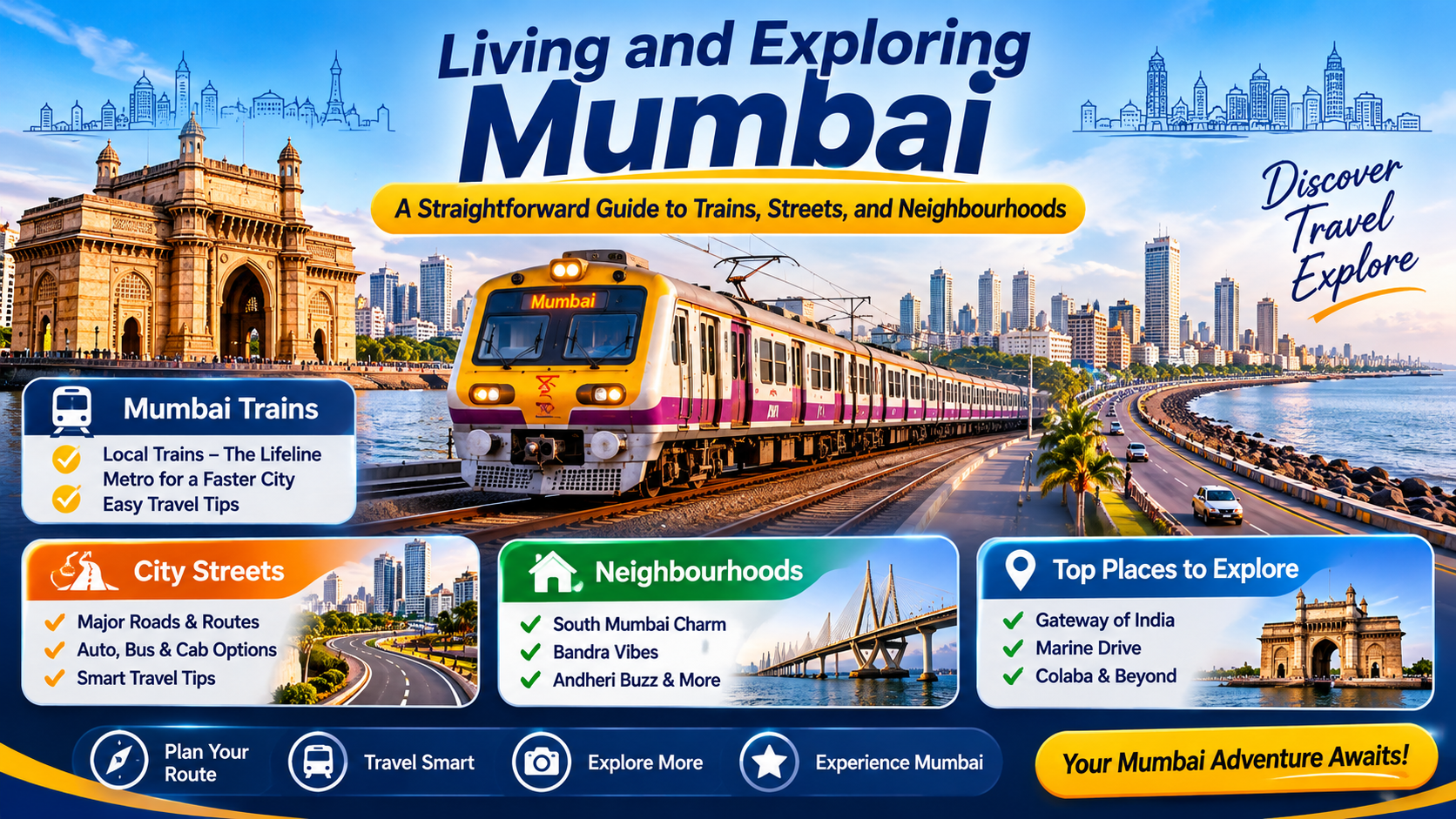
Living and Exploring Mumbai: A Straightforward Guide to Trains, Streets, and Neighbourhoods
 Introduction
Mumbai runs on its own clock, and standard travel brochures rarely explain how the city actually works on a Tuesday morning. Figuring out which suburban rail platform avoids a twenty-minute detour, why adjacent lanes charge completely different rents, or where to find clean roadside snacks takes local experience. MumbaiOrbit brings those everyday conversations into one spot, serving as a practical community forum and city guide where residents, newcomers, and visitors share honest advice on transit, housing, food, and local business setups.mumbaiorbit.in
Mumbai Local Train Guide
Three rail lines carry most of the city's daily foot traffic: the Western Line running north from Churchgate, the Central Line heading inland from CSMT, and the Harbour Line curving toward Navi Mumbai.
Busy interchange stations like Dadar, Kurla, and Andheri act as the main crossover points when you need to switch between western and eastern suburbs.
You can pick up single-journey tickets, return fares, or seasonal passes at station windows, though booking digitally on the UTS mobile app lets you skip long counter queues.
Commuter crowds move in predictable tides—surging south toward business hubs during morning hours and flowing back north every evening.
Basic platform habits keep you safe: stand clear of open coach doors, never cross active railway tracks on foot, and hold onto overhead straps when trains brake sharply.
Checking live train-tracking apps before walking out the door helps you spot monsoon waterlogging delays or Sunday track maintenance blocks early.
Older stations still rely on steep foot over-bridges, though major stops have steadily added escalators and elevators for easier access.
Places to Visit in Mumbai
South Mumbai holds the densest stretch of colonial-era architecture, anchored by the Gateway of India, the Fort business district, and the ornate CSMT railway terminus.
Marine Drive, Juhu Beach, and Bandra Bandstand serve as the city's default gathering spots for catching cool Arabian Sea breezes after sundown.
History and art enthusiasts spend quiet afternoons inside the Chhatrapati Shivaji Maharaj Vastu Sangrahalaya (CSMVS) and the nearby National Gallery of Modern Art.
Prominent places of worship draw visitors across neighbourhoods, including the sea-linked Haji Ali Dargah, Siddhivinayak Temple, and Bandra's Mount Mary Church.
Hilltop gardens like Hanging Gardens and Kamala Nehru Park offer welcome greenery and sweeping coastal views above Malabar Hill.
Open-air street markets sit just a few blocks away from modern shopping districts and waterfront walkways.
Family-oriented stops include the Nehru Planetarium in Worli and the Taraporewala Aquarium along Marine Drive.
Weekend Getaways from Mumbai
Destination
Terrain & Vibe
Ideal For
Things to Keep in Mind
Matheran
Car-free red-earth forest paths
Quiet walking trails and valley views
Private vehicles stop outside town; walk or ride the toy train in
Lonavala
Misty hills and monsoon waterfalls
Quick overnight breaks in nature
Expressway traffic slows down heavily on Saturday mornings
Alibaug
Sandy beaches and coastal villages
Relaxed seaside weekends
Harbour ferry schedules shift with tides; road routes take longer
Karjat
River valleys and green farmlands
Quiet farmstays and beginner treks
Monsoon rains swell local rivers; arrange local transport early
Best Areas to Live in Mumbai
Monthly rents and flat sizes change drastically based on the suburb, building age, and walking distance to railway stations.
Timing your actual door-to-door commute to work matters far more than choosing a fashionable neighbourhood name.
Living within a ten-minute walk of a local train station, metro stop, or main bus route saves hours of weekly road travel.
Inspect the immediate street for everyday necessities—reliable vegetable vendors, chemists, and grocery stores simplify daily life.
Water supply hours, housing society rules, and evening street lighting vary from one lane to the next, so visit properties in person before committing.
Mumbai Metro Line 3 Guide
The underground Aqua Line links Cuffe Parade at the southern tip of the city directly with Aarey Colony in the northern suburbs.
Dedicated underground walkways connect metro stations with mainline railway terminals and older elevated metro corridors.
Air-conditioned coaches bypass street-level traffic jams entirely, cutting substantial travel time off north-south journeys.
Automated entry gates accept single-ride tokens, rechargeable smart cards, and mobile QR tickets.
Brightly lit concourses, clear directional signs, and security screening keep passenger movement orderly.
Mumbai 3 Day Itinerary
Day One Morning: Start at the Gateway of India and board an early ferry across the harbour to explore the ancient rock-cut caves on Elephanta Island.
Day One Afternoon: Return to Colaba for lunch, then walk past the heritage stone buildings and museum galleries around Fort.
Day One Evening: Stroll along Marine Drive as the streetlights flicker on before having dinner at a nearby coastal eatery.
Day Two Morning: Walk the concrete causeway out to Haji Ali Dargah and follow the shoreline up along Worli Seaface.
Day Two Afternoon: Cross into Bandra to explore quiet heritage lanes, street murals, and neighbourhood cafes.
Day Two Evening: Head up to Juhu Beach to watch the sunset and sample local roadside snacks.
Day Three Morning: Visit Crawford Market early to browse wholesale spices, dried fruits, and household goods before the aisles pack out.
Day Three Afternoon: Stop at a traditional Irani cafe in South Mumbai for lunch and browse nearby independent bookshops.
Day Three Evening: Walk up to Hanging Gardens at dusk for wide views overlooking the coastline.
Best Street Food in Mumbai
Vada Pav: A hot, spiced potato fritter tucked inside a soft bread bun with fiery dry garlic chutney.
Pav Bhaji: Mashed vegetables simmered in spices and butter, served sizzling hot alongside toasted bread rolls and chopped onions.
Bhel Puri: Puffed rice tossed with crisp sev, diced potatoes, raw onions, and tangy tamarind chutney.
Pani Puri: Crisp hollow shells stuffed with spiced chickpeas and potatoes, dunked in chilled mint and tamarind water.
Sev Puri: Flat crisp puris layered with diced potatoes, three chutneys, and a thick blanket of crunchy yellow sev.
Bombay Sandwich: Sliced white bread stacked with boiled potatoes, beetroot, cucumber, and fresh green coriander chutney.
Misal Pav: A spicy sprouted moth-bean curry topped with crunchy farsan and served with soft pav.
Shopping Markets in Mumbai
Market Name
What You Will Find
Practical Shopping Advice
Crawford Market
Wholesale spices, dried fruits, and kitchenware
Go before noon to beat heavy crowds and verify package weights
Colaba Causeway
Casual clothes, oxidized jewellery, and souvenirs
Bargain politely and keep bags zipped in narrow lanes
Linking Road
Footwear, export-surplus apparel, and handbags
Walk the entire stretch to compare prices across stalls
Fashion Street
Budget everyday clothing near Azad Maidan
Inspect stitching, buttons, and fabric quality before paying
Chor Bazaar
Vintage furniture, brassware, and antique curios
Expect tough bargaining and check item condition carefully
How to Start a Small Business in Mumbai
Study specific neighbourhood gaps carefully before locking in your product or service idea.
Build a realistic cash reserve covering commercial rent deposits, initial inventory, utility bills, and at least six months of operating expenses.
Pick a storefront or workspace with steady foot traffic, practical delivery access, and nearby public transit links.
Choose the legal structure—sole proprietorship, partnership, or private limited company—that matches your growth plans.
Complete mandatory registrations early, including municipal Shop and Establishment licenses, GST numbers, and trade-specific permits.
Combine UPI and card payment terminals with clean daily bookkeeping from your very first sale.
Build local visibility by listing on neighbourhood directories, engaging with resident groups, and encouraging word-of-mouth referrals.
Mumbai Community Forum
Ask Mumbai: A straightforward Q&A space where residents trade practical answers on local services and city logistics.
Trains & Transport: Real-time threads tracking rail delays, Sunday maintenance blocks, and smarter station exits.
Housing: Candid peer discussions around brokerage norms, society rules, and realistic suburb rents.
Khau Galli: A dedicated board for sharing reliable food stalls, regional kitchens, and late-night snack corners.
Maharashtra Matters: Broader conversations covering state festivals, civic updates, and regional travel notes.
Common Mumbai Living and Travel Mistakes
Common Mistake
Practical Solution
Boarding peak-hour local trains with large suitcases
Travel outside rush windows or book an app-based cab for airport runs
Relying on outdated bus route numbers
Check live transit updates on official mobile apps before leaving
Signing a rental lease without testing the morning commute
Travel the exact route at 9:00 AM on a weekday before paying a deposit
Assuming short distances on a map mean quick cab rides
Add generous buffer time for cross-suburb traffic bottlenecks
Visiting museums without checking weekly closing days
Verify opening hours and ticket rules online beforehand
Eating at empty roadside stalls with slow food turnover
Stick to busy stalls where snacks are fried and served fresh
Buying street-market garments without checking seams
Inspect zippers, buttons, and stitching closely on the spot
Opening a shop before clearing municipal paperwork
Consult a local compliance advisor to secure trade licenses first
Benefits of Using a Local Mumbai Information Platform
Skip polished real-estate brochures and hear realistic feedback from people living in those exact suburbs.
Pick up practical commuting shortcuts from daily riders who know which train coach lines up with the station exit.
Compare rental neighbourhoods through candid resident threads rather than guesswork.
Discover reliable local eateries and street markets that rarely show up on standard tourist lists.
Ask specific logistical questions and help newcomers sidestep common city headaches.
MumbaiOrbit functions as an open community noticeboard where residents pool this everyday knowledge in one place.
Practical Mumbai Scenarios
Scenario A (Fictional): Meera moved from Bengaluru for a media job in Lower Parel and browsed housing threads on MumbaiOrbit to find a walkable flat near a Western Line station, avoiding a gruelling daily road commute.
Scenario B (Fictional): A group of friends visiting from Jaipur used local itinerary notes to plan a three-day loop covering South Mumbai museums, coastal walks, and street food lanes without wasting hours stuck in traffic.
Scenario C (Fictional): Kabir planned to open a small bakery kitchen in Andheri and checked community business threads to understand local municipal licensing rules and wholesale ingredient markets.
Frequently Asked Questions
What are the main local train lines in Mumbai?
The suburban rail network operates across three primary corridors: the Western Line, Central Line, and Harbour Line. These routes connect distant northern and eastern suburbs directly with South Mumbai's commercial districts, carrying millions of daily commuters.
How do I purchase tickets for Mumbai local trains?
You can buy single-journey tickets or return fares at station ticket windows and automated vending machines. Daily riders typically use monthly or quarterly passes, while digital tickets are easily booked through the official UTS mobile app.
What are the top tourist spots to visit in Mumbai?
Key landmarks include the Gateway of India, Marine Drive, Chhatrapati Shivaji Maharaj Vastu Sangrahalaya, and Siddhivinayak Temple. Visitors also enjoy walking through colonial-era Fort, exploring art galleries in Kala Ghoda, and strolling along Bandra's promenades.
Which weekend destinations are closest to Mumbai?
Popular weekend escapes include the hill stations of Matheran and Lonavala, the coastal town of Alibaug, and the riverside farms around Karjat. These spots are reachable within a few hours by road, suburban train, or harbour ferry.
How do I figure out the best area to live in Mumbai?
The right neighbourhood depends on your office location, monthly rent budget, and proximity to train or metro lines. Balancing daily commute time against apartment size and nearby essentials helps narrow down your search.
What is Mumbai Metro Line 3?
Metro Line 3 is an underground rapid-transit corridor connecting Cuffe Parade in South Mumbai to Aarey Colony in the northern suburbs. It provides air-conditioned travel and direct links to mainline railway stations and bus routes.
How should I structure a three-day sightseeing trip?
Group sights by neighbourhood to minimize travel time: spend day one exploring South Mumbai heritage landmarks, day two along coastal promenades and Bandra, and day three browsing local markets, cafes, and hilltop gardens.
What are some classic street foods to try?
Must-try local dishes include vada pav, pav bhaji, bhel puri, pani puri, sev puri, Bombay sandwich, and misal pav. These snacks deliver bold spicy, tangy, and savoury flavours across street stalls citywide.
Which markets are best for bargain shopping?
Crawford Market is ideal for spices and household goods, Colaba Causeway and Linking Road offer trendy clothes and accessories, Fashion Street focuses on budget apparel, and Chor Bazaar specializes in antiques and vintage finds.
What are the initial steps for starting a small business?
Start by validating local customer demand, building a financial buffer, and securing a compliant commercial space. You will also need formal business registration, municipal trade licenses, GST setup, and digital payment tools.
How can a community forum help someone new to the city?
Newcomers can use community forums to ask direct questions about transit routes, check realistic rent expectations, discover reliable local eateries, and learn practical neighbourhood tips from experienced residents.
What is the purpose of MumbaiOrbit?
MumbaiOrbit serves as a local information platform and community forum where residents, newcomers, and visitors share practical recommendations, ask everyday city questions, and explore guides to living in and visiting Mumbai.
Conclusion
Learning how Mumbai's suburban trains, distinct neighbourhoods, weekend getaways, street food corners, and small-business rules fit together turns an overwhelming metropolis into a city you can genuinely enjoy. Ground-level insight saves hours of daily commuting frustration and keeps newcomers from making costly housing or travel missteps. MumbaiOrbit brings those everyday conversations together, offering a straightforward community space where residents and visitors can read reliable guides, swap honest local tips, and navigate Mumbai with confidence.mumbaiorbit.in